 1. Midnight Indigo and Smoked Walnut
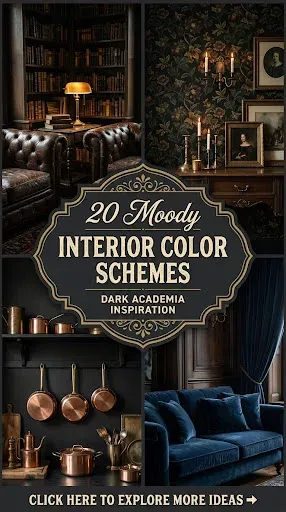
Stepping into a room framed by midnight indigo and smoked walnut feels akin to entering a private, rain-dappled library at twilight. Midnight indigo carries an extraordinary depth that absorbs light in the gentlest way, creating a velvety perimeter that feels both infinite and protective. When paired with the raw, rich grain of smoked walnut, the atmosphere shifts from merely dark to profoundly sophisticated. The secret to mastering this palette lies in balancing matte indigo walls with polished, highly textured wood surfaces—think hand-scraped hardwood floors, heavy chevron wall paneling, or a bespoke walnut credenza. The deep blue acts as a backdrop that lets the warm, golden-brown undertones of the wood radiate with understated luxury.
To keep this dark interior from feeling visually heavy, layer in organic tactile elements that bounce ambient light across the room. Consider an oversized sofa upholstered in navy velvet paired with burnt-umber leather armchairs. Accessories should lean into warm metallics: brushed antique brass sconces, hand-hammered bronze bowls, and deep amber glassware. Soft furnishings should introduce subtle texture rather than loud patterns—think heavy linen drapes in slate gray and hand-knotted wool rugs in muted storm tones. This scheme works exceptionally well in dining rooms, home offices, and primary bedrooms where an atmosphere of quiet, cocooning elegance is desired.
2. Obsidian and Distressed Terracotta

Where modern minimalism meets rustic Mediterranean warmth, the pairing of obsidian and distressed terracotta creates a striking, moody narrative. Pure obsidian paint offers an uncompromising, dramatic backdrop that strips away unnecessary visual noise. Instead of feeling cold, however, it becomes instantly grounded and welcoming when paired with the baked, earthy tones of terracotta. This combination taps into a elemental energy—fire, earth, and shadow working in total harmony. The contrast between the sleek, receded nature of the black and the tactile, chalky surface of raw clay creates an intoxicating spatial depth.
Incorporate this scheme by utilizing matte black paint on accent walls or ceiling beams, contrasted against large-format terracotta floor tiles, unglazed ceramic vases, and exposed brick painted in dusty sienna. To soft-focus the harshness of the black, introduce warm neutral textiles such as cream slub linen, chocolate brown suede, and hand-woven jute. Lighting is critical here; opt for low-kelvin warm light fixtures that cast long, dramatic shadows across the earthy surfaces. A single vintage plaster lamp sitting atop a dark oak side table, draped with a heavy rust-colored throw, perfectly captures this moody yet rustic aesthetic.
3. Forest Charcoal and Antique Brass
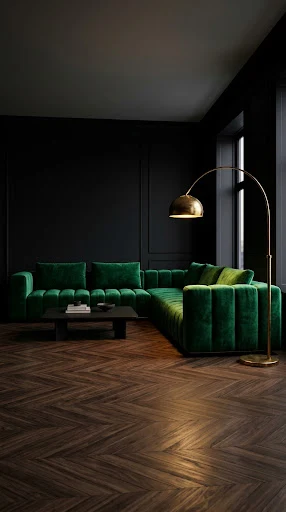
Forest charcoal is a mesmerizing, shapeshifting hue—a color that hovers precariously between the deep green of an ancient pine canopy and the dark, smoldering gray of volcanic ash. When this mysterious shade coats the walls of a room, it creates an immediate sense of quiet drama. Introducing antique brass transforms the space from somber to regal. The muted, patinated glow of aged brass cuts through the cool, shadowy depth of the forest charcoal, shining like light filtering through a dense woodland canopy. This color scheme excels in spaces meant for evening relaxation and intimate conversations.
To execute this look, paint both the walls and the architectural trim—including baseboards, crown molding, and window frames—in a uniform matte forest charcoal finish. This color-drenching technique eliminates hard visual breaks and makes the space feel expansive yet intimate. Accentuate the gloom with high-contrast brass elements: a burnished brass sputnik chandelier, unlacquered brass cabinet hardware, and tall brass floor mirrors. Bring in soft emerald velvet seating, charcoal-washed silk curtains, and matte black steel accents to layer the dark undertones while letting the metallic highlights steal the show.
4. Deep Plum and Burnt Umber
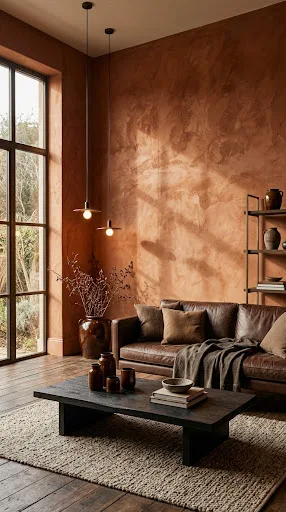
Intoxicating, romantic, and unapologetically dramatic, deep plum paired with burnt umber is a palette straight out of a Renaissance oil painting. Deep plum brings a heavy, wine-infused richness that shifts under changing light—appearing almost black at night and glowing with a subtle violet undercurrent during the day. Burnt umber acts as its perfect grounding partner, adding an earthy, wood-smoke warmth that prevents the purple tones from feeling overly sweet or whimsical. Together, they create an atmosphere of opulent indulgence.
Build this mood by using deep plum as your main wall coat, ideally in a matte or limewash finish to give the dark walls a suede-like texture. Introduce burnt umber through rich mahogany or cherry wood furniture, cognac leather club chairs, and heavy brocade or velvet textiles. Layering is key to making this dark palette feel expensive: lay a vintage Persian rug with deep aubergine and rust tones, top the bed with dark plum silk sheets under a heavy umber wool quilt, and illuminate the space with smoked-glass lamps that cast a warm, golden glow across the moody interior.
5. Smoked Olive and Muted Cognac
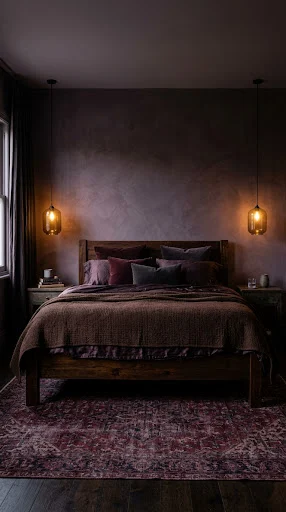
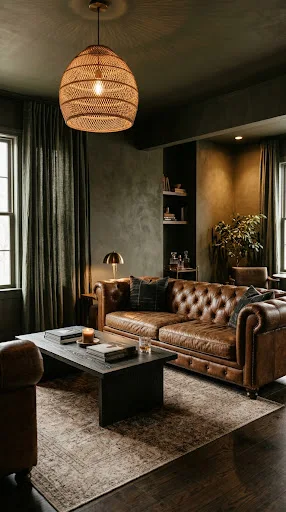
Smoked olive is a moody designer favorite due to its uncanny ability to bring nature indoors while maintaining a sophisticated, brooding edge. Unlike brighter botanical greens, smoked olive carries heavy gray and brown undertones, making it feel grounded, historic, and incredibly calm. When paired with the rich, buttery warmth of muted cognac, the color scheme instantly evokes the cozy atmosphere of an upscale countryside manor or an exclusive heritage club house. The cool, quiet olive tones provide a soothing backdrop, allowing the golden-tan tones of cognac leather and aged wood to shine.
Apply smoked olive lavishly across all four walls, perhaps utilizing a color-washed paint technique or Roman clay to achieve an artisanal, aged plaster look. Bring in a substantial chesterfield sofa upholstered in worn cognac leather as the centerpiece of the room. Balance these heavy elements with light-filtering accessories, such as woven rattan light fixtures, natural linen drapery in dusty sage, and accent pillows in deep moss green and warm ochre. Charcoal-stained oak coffee tables and matte black iron accents will anchor the palette and ensure the room remains firmly grounded in its moody aesthetic.
6. Charcoal Slate and Dusty Rose
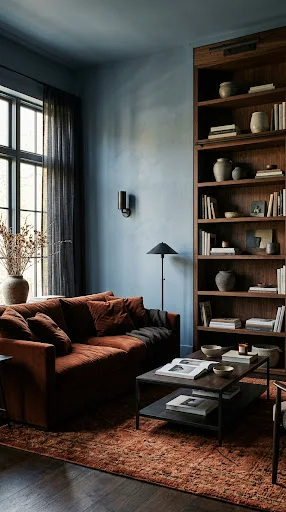
For those who wish to explore moody interiors without fully committing to an entirely dark space, charcoal slate and dusty rose offer the perfect study in balance and contrast. Charcoal slate provides a heavy, moody foundation—a cool, mineral dark gray that feels structured and secure. Dusty rose breaks through this brooding intensity with a soft, romantic, and slightly melancholic touch. The key to this pairing is ensuring the pink tone is thoroughly desaturated with gray undertones, keeping it far away from pastel territory and firmly within a mature, sophisticated realm.
Paint the main walls in deep charcoal slate, using a soft eggshell or matte sheen. Use dusty rose strategically on large-scale upholstery—such as a curved channel-tufted velvet sofa or an oversized upholstered headboard. Keep the remaining accents cool and moody: dark charcoal drapery, slate-colored wool area rugs, and matte black lighting fixtures. To bring a touch of warm luxury into the room, add subtle accents of brushed champagne gold or polished copper through floor lamps, picture frames, and decorative bowls. The resulting environment is soft yet dark, feminine yet grounded.
7. Dark Teal and Raw Amber
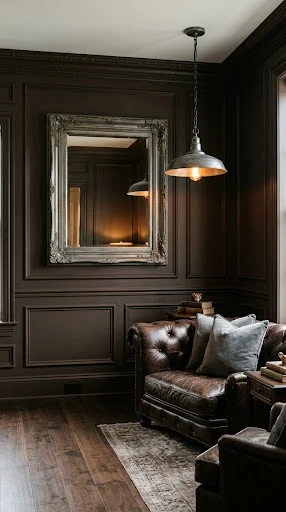
Dark teal is a dynamic, atmospheric color that combines the calming depth of oceanic blue with the invigorating vitality of forest green. When saturated to its darkest values, it creates a jewel-toned sanctuary that feels both protective and deeply artistic. Pairing dark teal with raw amber creates an intoxicating color contrast; amber sits directly opposite blue-green on the color wheel, creating a high-energy contrast that feels completely organic. The glowing, honeyed warmth of raw amber breaks through the moody deep-water chill of teal, illuminating the space like sunlight piercing through deep sea water.
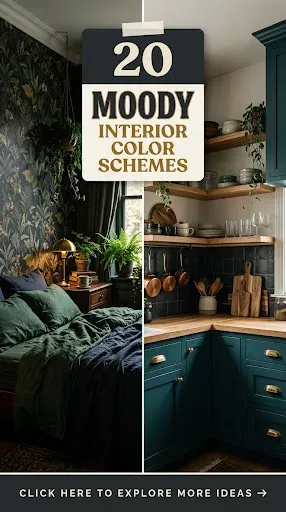
To style this color scheme, coat your walls in a rich, dark teal paint with subtle sheen to reflect ambient light softly. Bring in raw amber through warm lighting, natural amber gemstone decor, and rich ochre velvet pillows. Wood elements in this room should feature mid-century amber finishes like warm teak or honey oak. For window treatments, select heavy teal velvet curtains that pool gracefully on the floor, paired with sheer amber-tinted linen sheers underneath. Finish the room with brushed brass sconces fitted with vintage Edison bulbs to maximize the amber glow against the deep teal canvas.
8. Raven Black and Oxblood

Bold, dramatic, and intensely moody, raven black and oxblood is a color pairing not for the faint of heart. Raven black provides a total visual reset—a deep, light-absorbing backdrop that strips away distractions and creates a sense of infinite boundary. Oxblood, a deep, blackened red with blue undertones, brings a pulse of historic drama and visceral warmth into the dark void. This combination evokes grand gothic architecture, historic private theaters, and opulent Victorian parlors, transformed with a sleek modern sensibility.
In a raven black space, texture is essential to prevent the room from looking flat or cave-like. Choose high-texture wall finishes such as black lime wash, dark shiplap, or matte black wall molding. Introduce oxblood through heavy, luxurious fabrics: oxblood velvet drapes, a burgundy leather accent chair, or an antique rug dominated by deep wine tones. Keep lighting low, warm, and focused—use accent spotlights to illuminate targeted features like oil painting portraits, textured wall hangings, or polished mahogany furniture. The overall effect is intensely dramatic, cozy, and profoundly striking.
9. Moody Storm Gray and Bleached Oak
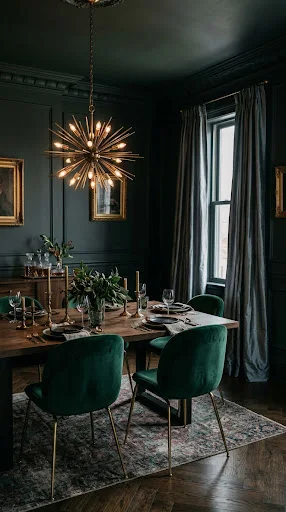
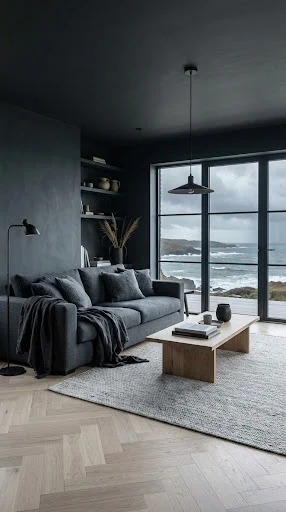
Capturing the wild, fleeting atmosphere of an ocean sky before a tempest, moody storm gray paired with bleached oak offers a cool-toned, tempestuous interior scheme. Storm gray is a complex shade that swirls with subtle hints of deep blue, violet, and dark green depending on the time of day. It provides an atmospheric, moody envelope that feels like a cozy sanctuary during harsh weather. Bleached oak brings a striking, modern contrast—its pale, desaturated wood grain slices through the stormy darkness, injecting clean, organic lightness without disrupting the peaceful mood.
Paint walls and ceilings in a dark, enveloping storm gray to create a seamless, cocooning effect. Install pale, bleached oak flooring in a herringbone pattern to add geometric interest and bounce natural light low to the ground. Furnish the room with storm-gray wool sofas, charcoal linen throws, and minimalist light oak coffee tables and shelving. Contrast the organic wood elements with sleek metallic touches like brushed nickel, chrome, or dark iron. Decorate with moody seascape photography, ceramics in shades of stone, and tall vases filled with dried wild grasses to complete this coastal storm aesthetic.
10. Espresso and Weathered Pewter
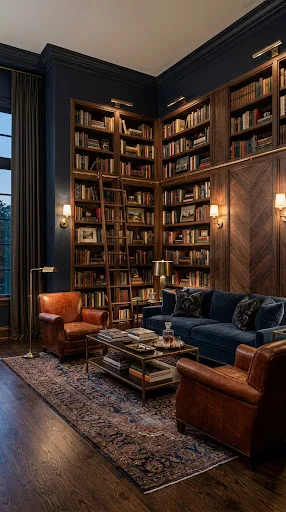
Darker and richer than standard chocolate brown, espresso carries intense black undertones that make it an extraordinarily sophisticated choice for moody interiors. It envelops a room in a warm, dark hue that feels like rich cocoa and aged mahogany. Weathered pewter serves as the ideal metallic and tonal accent for espresso. While brass and gold add warm sparkle, weathered pewter offers a cool, muted, industrial counterweight that tempers the deep warmth of the brown, preventing the room from feeling overly traditional or heavy.
Apply deep espresso paint to the walls using a subtle satin finish to highlight architectural details like wainscoting or coffered ceilings. Layer the room with rich coffee-toned leather seating, dark chocolate wool drapery, and dark walnut flooring. Introduce pewter through oversized wall mirrors with patinated silver frames, industrial-style pewter light fixtures, and hardware on custom cabinetry. Complement the palette with cool gray accent textiles—such as a chunky knit pewter throw or ash-gray velvet accent pillows—to bridge the gap between the dark brown walls and the cool metallic accents.
11. Deep Auburn and Slate Blue
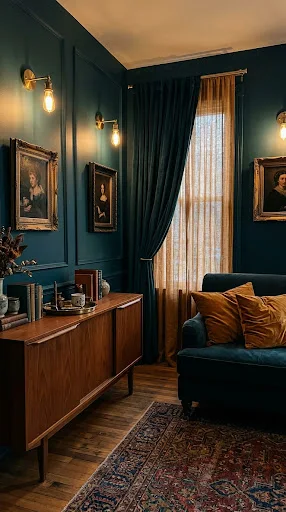
Deep auburn and slate blue form an unexpectedly harmonious pairing that balances warm, fiery earth tones with cool, serene atmospheric shades. Deep auburn sits at the intersection of rich rust, burnt orange, and dark mahogany, bringing a glowing, autumnal warmth into any interior. Slate blue provides a dusty, cool, and quiet contrast that settles the energetic warmth of the auburn. The interplay between the warm rustiness of auburn and the calm, stony depth of slate blue creates a moody environment that feels dynamic yet thoroughly balanced.
Consider using slate blue as the dominant wall color in a matte finish to establish a quiet, shadowy atmosphere. Bring deep auburn into the foreground through key furniture pieces—a custom auburn velvet sofa, a burnt-sienna wool area rug, or rich terra-cotta window treatments. Enhance the depth of the palette by integrating dark iron fixtures, rich walnut furniture, and accent ceramics in matte slate and rusted clay. This palette excels in living rooms and open-plan spaces, providing a sophisticated balance between cozy warmth and cool tranquility.
12. Midnight Navy and Burnished Copper

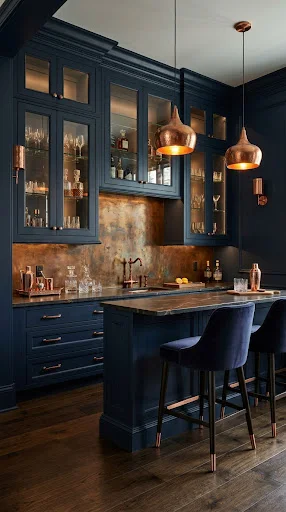
Midnight navy is a timeless dark neutral that offers the ultimate in atmospheric elegance. It creates a space that feels expansive and quiet, reminiscent of an open night sky. When illuminated by burnished copper, the deep blue walls come alive with fiery brilliance. Copper carries a warm, pinkish-orange glow that contrasts sharply against the cool, dark navy background. Unlike shiny brass, burnished copper has a deep, aged patina that fits naturally into a moody interior scheme without feeling overly reflective or flashy.
Drench the room in midnight navy paint, applying it to walls, trim, and built-in bookshelves. Use burnished copper accents intentionally where light naturally strikes: copper pendant lights hanging over a kitchen island or dining table, copper-framed wall art, and unlacquered copper planters holding dark green foliage. Complete the look with navy leather or velvet furniture, complemented by accent pillows in muted rust, dark indigo, and warm sand. Dark-stained oak floors will anchor the space, allowing the metallic copper elements to act as glowing focal points against the midnight blue drop.
13. Dusty Sage and Charcoal Plum
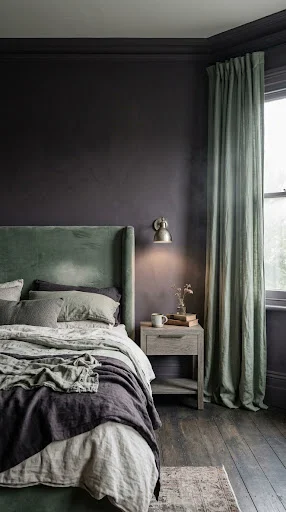
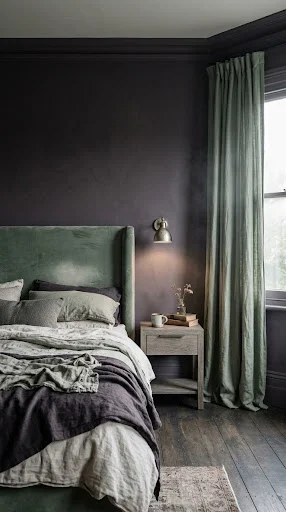
Combining ethereal earthiness with deep, shadowed luxury, dusty sage and charcoal plum create a subtle, artistic interior color scheme. Dusty sage is a muted green infused with heavy gray undertones, making it feel misty, atmospheric, and calm. Charcoal plum adds an unexpected lay of moody shadow—a dark gray infused with deep violet that grounds the lighter, airier sage. This combination feels akin to a misty morning garden illuminated by early, low light, making it an ideal palette for serene bedrooms and relaxing sitting rooms.
Paint walls in charcoal plum to create an immediate cocoon-like enclosure. Introduce dusty sage through large-scale soft furnishings: a velvet headboard, floor-length linen drapes, or an accent armchair. Keep wood elements in soft, natural tones like grey-washed oak or raw ash. Bring in subtle metallic touches using antique silver or pewter fixtures to echo the cool tones of the sage. Layering lightweight sage green linens with deep plum velvet throws will yield a tactile experience that highlights the sophisticated depth of this moody botanical color scheme.
14. Burnt Terracotta and Smoked Bronze
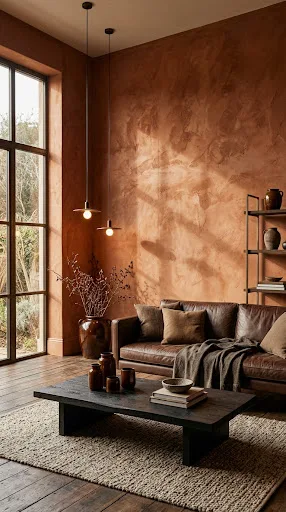
Burnt terracotta and smoked bronze build an atmosphere rich in rustic warmth and dark, earth-bound drama. Burnt terracotta takes the traditional clay tone and deepens it with heavy rust and brown undertones, creating a color that radiates intense, cozy warmth without feeling harsh. Smoked bronze serves as a dark metallic anchor, bringing industrial weight and shadowed depth that keeps the clay tones firmly rooted in modern sophistication. The result is a moody interior that feels thoroughly grounded, warm, and inviting.
Use burnt terracotta on walls in a Roman clay or limewash application to create an inviting, artisanal texture that catches natural light softy. Pair this warm backdrop with smoked bronze lighting fixtures, dark bronzed metal window frames, and hardware. Furnish the room with dark mahogany or black oak pieces, paired with chocolate leather, camel wool, and woven jute textiles. Incorporate matte black and deep amber ceramics to layer additional dark tones, creating a space that feels like a sun-baked desert sanctuary after nightfall.
15. Pitch Black and Emerald Velvet

Nothing quite captures the essence of classic moody interiors like the contrast between pitch black and deep emerald velvet. Pitch black creates an absolute backdrop that drops visual boundaries, making walls appear to recede infinitely into shadow. Emerald velvet introduces a brilliant, jewel-toned pulse of color that catches light along its soft pile, glowing against the black canvas like a precious stone. This pairing is modern, dramatic, and unapologetically glamorous, perfect for moody lounge spaces, home theaters, or grand dining rooms.
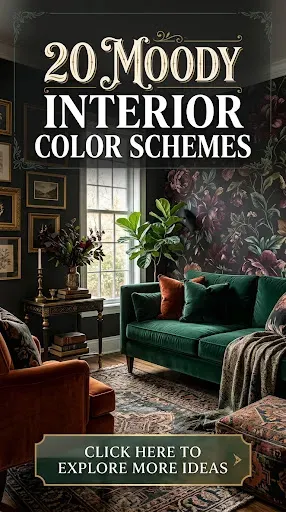
To execute this look, paint walls in a rich, non-reflective flat black. Contrast this dark backdrop with a grand sectional sofa upholstered in deep emerald green velvet. To keep the space from feeling stark, introduce natural warmth through rich wood elements like dark walnut herring bone flooring or an antique dark wood bar cabinet. Use burnished gold or brass lighting to cast warm pools of light across the velvet surfaces, bringing out the vibrant green undertones while maintaining the dark, captivating ambiance of the surrounding black walls.
16. Shadow Grey and Raw Sienna
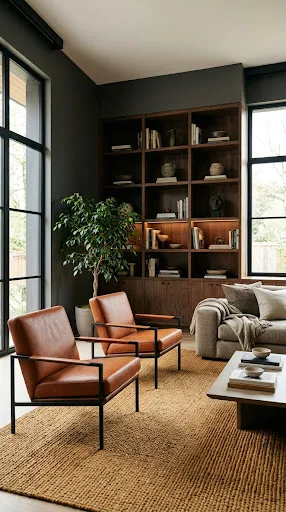
Shadow grey and raw sienna offer an atmospheric study in temperature contrast. Shadow grey is a rich, neutral dark grey that sits right in the middle between cool slate and warm charcoal, offering an open canvas for light and shadow to play upon. Raw sienna introduces an earthy, golden-brown warmth that feels deeply historic and natural. The crisp neutrality of shadow grey keeps raw sienna from feeling overly rustic, while the warm sienna infuses life and energy into the cool grey surroundings.
Apply shadow grey across walls and cabinetry using a smooth matte finish. Introduce raw sienna through leather upholstery, ochre wool area rugs, and raw terracotta decor pieces. Dark, stained walnut wood fits seamlessly into this scheme, along with matte black steel framing for light fixtures and architectural details. Keep window treatments simple with dark grey linen panels that allow natural light to wash across the warm sienna textiles, creating a serene, modern space that feels both grounded and spacious.
17. Deep Ochre and Cast Iron Black

Deep ochre and cast iron black form a moody color palette that radiates artistic energy and historic strength. Deep ochre is a rich, golden-yellow earth pigment steeped in brown undertones, giving it a warm, autumnal mood rather than a bright summer feel. Cast iron black provides a solid contrast—a matte, heavy black tone that brings structure, line, and dark weight to the space. Together, they create a space that feels like a vintage artist studio or a cozy European bistro.
Paint walls in a rich, moody deep ochre finish, using a low-luster sheen to accentuate its warm undertones. Contrast the bright walls with heavy cast iron black architectural details: black-painted doors and trim, iron light fixtures, black steel framed mirrors, and a black stone fireplace mantel. Furnish with dark brown leather, charcoal wool, and black-stained oak pieces. The rich golden backdrop will make the heavy black elements stand out, creating an interior that feels warm, historic, and undeniably moody.
18. Dark Forest Green and Weathered Copper
Dark forest green and weathered copper bring the captivating mood of an ancient, rain-soaked forest straight into the interior home. Dark forest green is a deeply saturated, cool botanical color that absorbs light and instills a profound sense of quiet and sanctuary. Weathered copper—with its distinctive patinated blend of turquoise-green oxidation, soft brown, and muted metallic copper—provides an organic counterpoint that looks as though it was shaped by time and nature itself.
Drench the walls in a matte dark forest green paint to establish a rich, shadowy perimeter. Incorporate weathered copper through unique statement features: a patinated copper fireplace surround, rustic copper light fixtures, or decorative copper wall art with natural verdigris patina. Complement these tones with natural wood furniture in medium-to-dark oak, forest green velvet textiles, and slate flooring. The natural harmony between green and oxidized copper creates a timeless atmosphere that feels grounded and full of character.
19. Deep Ochre and Charcoal Navy
Combining the celestial depth of deep blue with the earthy brilliance of golden clay, deep ochre and charcoal navy build a moody palette rich in visual interest. Charcoal navy is a dark blue heavily desaturated with gray, giving it a stormy quality that feels far more complex than traditional navy. Deep ochre brings an earthy light into this midnight storm, casting a warm, golden glow that illuminates the dark surrounding space.
Use charcoal navy as the primary coat for walls and ceiling to wrap the room in a dark, atmospheric envelope. Introduce deep ochre through warm velvet seating, mustard linen bedding, or large-scale abstract artwork featuring golden earth tones. Balance the dynamic contrast with dark charcoal rugs, matte black iron accent tables, and antique brass lighting fixtures. The warm ochre accents will pop against the deep navy background, creating an environment that feels both cozy and sophisticated.
20. Smoked Mahogany and Vintage Gold
Smoked mahogany and vintage gold form the ultimate expression of moody luxury and classic warmth. Smoked mahogany is a deep red-brown shade infused with charcoal undertones, reminiscent of aged wood, dark tobacco, and fine leather. Vintage gold provides the perfect metallic accent—soft, muted, and patinated, it glows with a gentle warmth rather than a harsh glare. This palette creates an opulent, historical mood perfect for intimate dining spaces, cozy dens, or primary bedrooms.
Coat walls in a rich smoked mahogany shade, using wood paneling or decorative trim to accentuate the classic depth of the color. Introduce vintage gold through ornate gilded mirror frames, antique wall sconces, brass cabinet pulls, and metallic-embroidered accent pillows. Layer the room with chocolate brown leather, dark aubergine velvet, and dark oak flooring. The muted shimmer of vintage gold against the dark brown walls builds a rich, timeless ambiance that feels like an exclusive retreat.