14. Handcrafted Leather Desk Mats & Catchalls
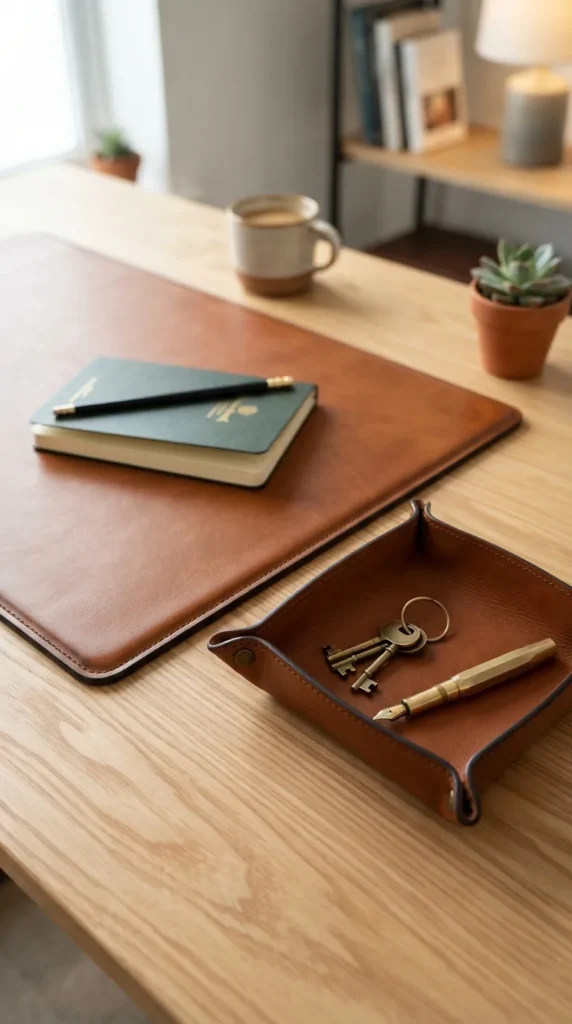
Vegetable-tanned leather desk pads and corner-riveted catchall trays bring timeless, functional organization to workspaces and entryways. Over time, natural leather develops a rich, personalized patina that increases its charm.
- Introduction & Concept: Work-from-home culture has driven strong demand for premium desk accessories. Full-grain, vegetable-tanned leather offers durability and classic design that mass-produced plastic organizers cannot match.
- Materials Needed: 5-6 oz full-grain vegetable-tanned leather hides, rotary leather cutter, self-healing cutting mat, edge beveler (size 2), tokonole burnishing gum, wooden slicker tool, solid brass Chicago screws or setter rivets, hole punch pliers, and water-resistant leather conditioner.
- How to Make It:
- Measure and cut the leather hide into clean, square rectangles using a heavy steel ruler and sharp rotary cutter.
- Round the outer corners neatly with a corner punch or coin template for smooth lines.
- Run an edge beveler along the top and bottom edge lines at a 45-degree angle to remove sharp square corners.
- Apply a thin, even coat of Tokonole burnishing gum along the raw edges.
- Rub the edge vigorously with a grooved wooden slicker until friction creates a glossy, smooth edge.
- For catchall trays, punch matching holes in each corner and secure them with solid antique brass rivets to form raised walls.
- Apply a light coat of natural beeswax or neat’s-foot oil over the surface to condition the leather fibers and highlight natural grain marks.
- Tips & Market Variations:
- Always cut full-grain leather in a single, smooth blade pass; repeated cutting strokes along the same line create jagged, stepped edges.
- Variations: Offer custom-stamped monogram initialing, integrated mouse-pad rest grooves, or contrasting wax-stitched borders.